How long should a YouTube video be to make money?
How long should a YouTube video be? Three factors decide it: the 8-minute mid-roll threshold, audience retention, and your niche's format type.
How long should a YouTube video be is one of the most practically consequential questions a faceless channel operator can ask, and the honest answer is: it depends on three things that interact. The first is the 8-minute mid-roll threshold, which is the single biggest structural break in YouTube monetization. The second is retention, because length only earns if the audience stays. The third is niche and format fit, because the right runtime for a true crime narrative is not the same as the right runtime for a science explainer or a sleep soundscape. Get the interaction right and runtime becomes a lever. Get it wrong and longer videos just accumulate watch time at low RPM with poor retention signals.
For most monetized channels, 8 to 20 minutes is the practical target window: long enough to enable mid-rolls, short enough that a well-scripted topic can hold retention through to the end. Narrative niches can push to 30 to 40 minutes. Ambient niches like sleep should go as long as the format allows.
The right YouTube video length for monetization
The 8-minute mark is the most important number in runtime planning, but it is a floor, not a target. From there, the upper bound is set by how long your content format can sustain high retention for your specific audience. Most niches land somewhere between 10 and 20 minutes in practice. Narrative formats with strong forward tension can extend well beyond that. The sections below explain why.
The 8-minute threshold and what it actually does
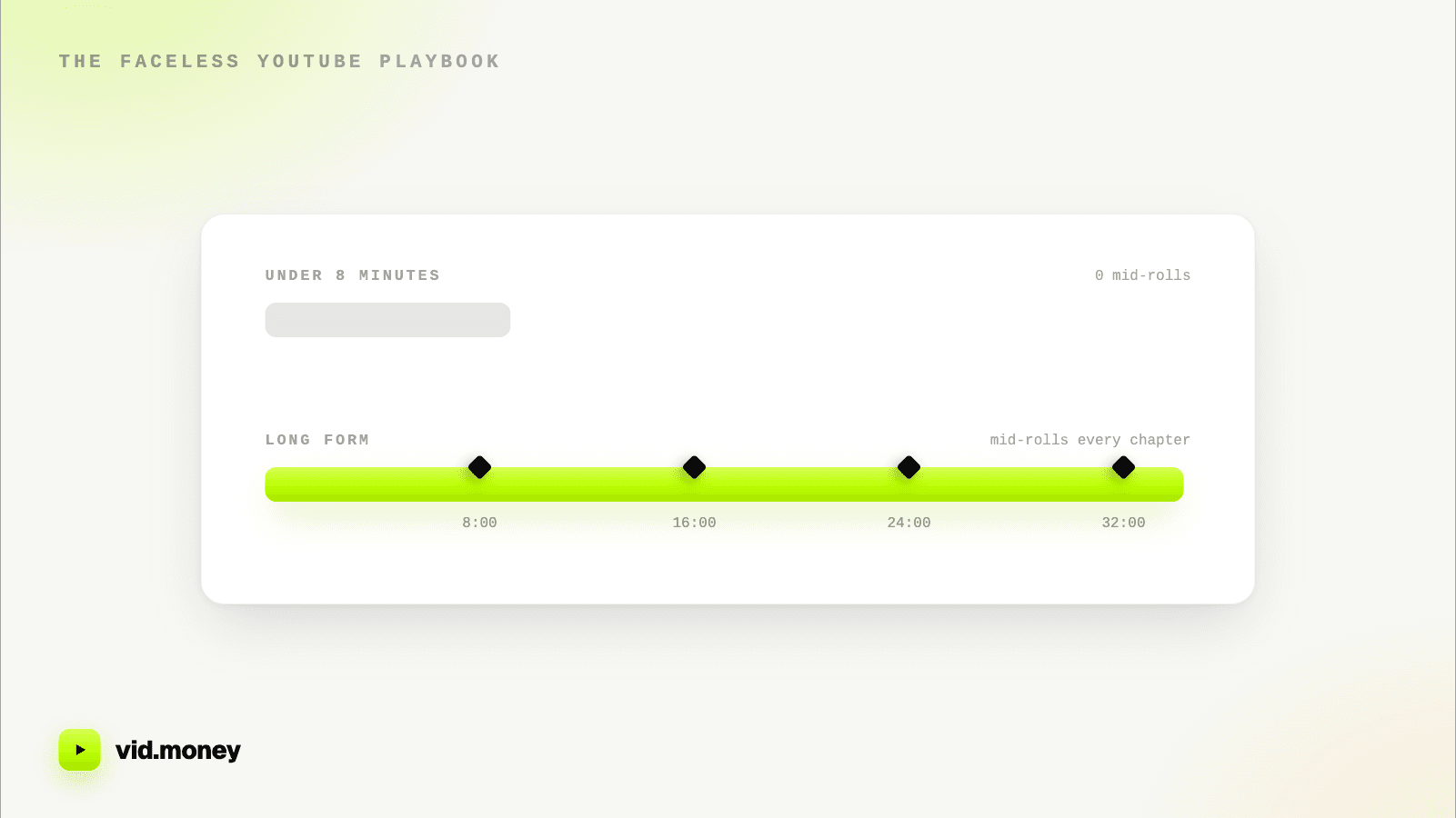
YouTube enables mid-roll ad placements on videos that are 8 minutes or longer. Below that mark, a video earns from pre-roll and post-roll placements only. Above it, YouTube can insert ads during the video itself, and the number of possible insertions scales with runtime. This is not a marginal difference. A pre-roll-only video and a video with three mid-rolls are operating in different revenue structures, even at identical view counts and identical RPMs.
The threshold exists because of how advertisers buy on YouTube. Mid-roll placements typically command higher CPM than pre-roll because the viewer is already engaged when the ad appears. From the channel operator's perspective, crossing 8 minutes is the most direct structural move available to increase revenue per view, assuming retention supports it.
How many ad slots does a longer video add?
Beyond 8 minutes, YouTube's system keeps adding available mid-roll slots as the video gets longer. A 12-minute video supports more insertions than a 9-minute video. A 25-minute video supports more again. YouTube handles placement automatically unless you choose to set them manually, and the algorithm generally spaces them to avoid degrading the viewing experience in a way that would hurt retention.
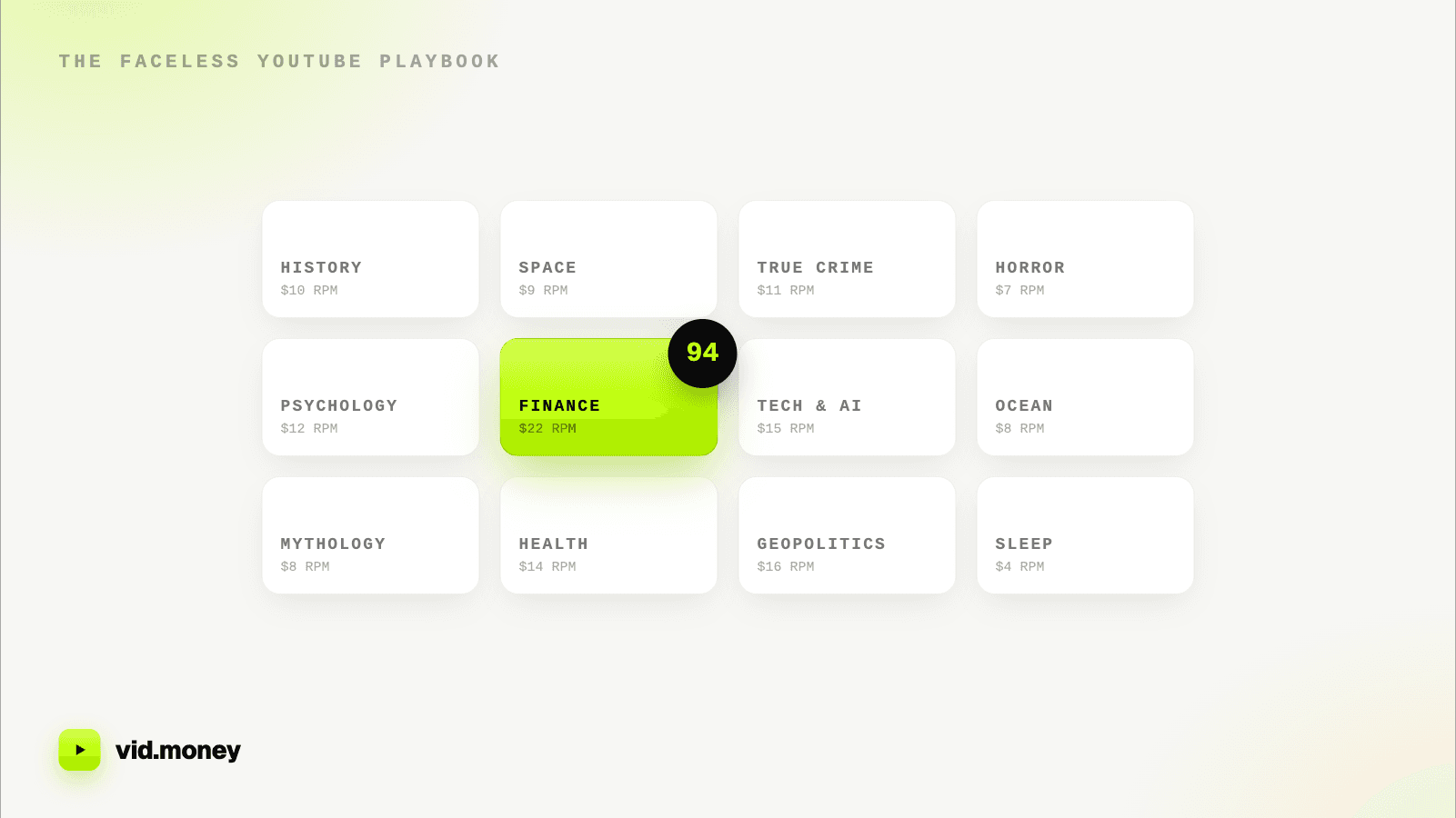
The practical implication is that for high-RPM niches, long-form video has a compounding structure. Each additional ad slot is another revenue event per view. For Money & Finance channels with an RPM around $22, or Business & Brands channels at around $18, the difference between a video with one mid-roll and one with four mid-rolls is substantial. These are planning numbers based on category averages, not guarantees, but the structural math is real.
Watch time as currency
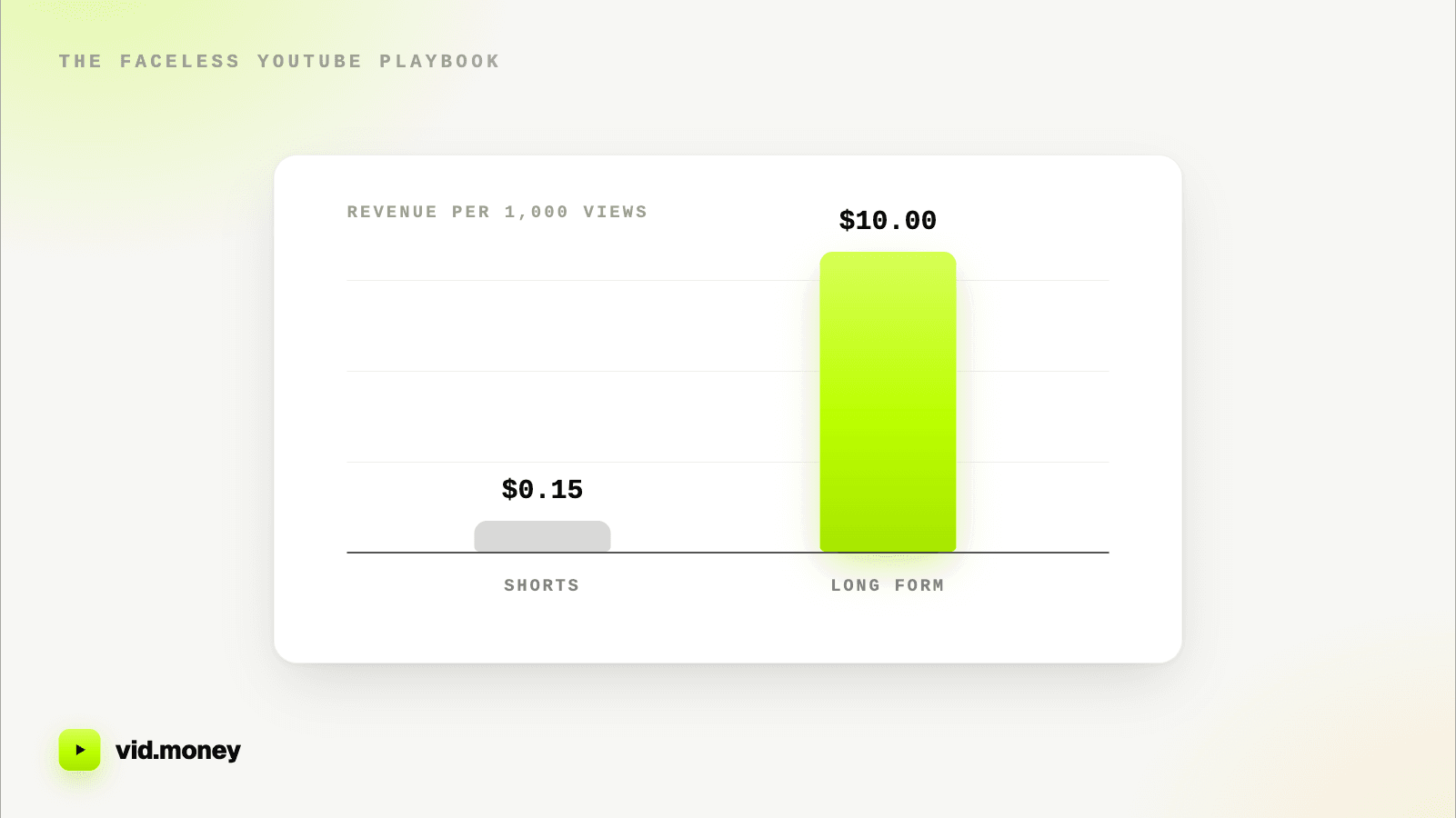
Runtime connects directly to the YouTube Partner Program gate. The requirement is 1,000 subscribers and 4,000 public watch hours. A channel publishing long-form content accumulates watch hours faster per video than one publishing short content, assuming retention holds. A 20-minute video at the same retention rate as a 5-minute video accumulates four times the watch hours per view. The RPM math post walks through how to model this for your specific niche.
Watch time matters beyond the YPP gate too. YouTube's recommendation system treats watch time and average view duration as signals of content quality. A video that holds viewers for a substantial portion of its runtime gets favored in suggested feeds over one that gets clicked and abandoned. This means that choosing a runtime your audience will actually watch through is more important for discoverability than optimizing for the maximum number of ad slots.
The retention tradeoff: length only pays if the video holds
Here is where operators go wrong. Padding a video to cross a threshold or add ad slots is a losing move if the audience drops off before those slots play. YouTube tracks when viewers leave, and a video with a steep drop-off curve after the first few minutes will receive weaker distribution regardless of its total runtime. The ad slots never get served to viewers who already left. This is the trap that runtime optimization falls into when it ignores the retention side of the equation. See the faceless workflow guide for how to evaluate topic scope before you commit production time.
The honest decision rule is: choose the runtime that your content format can sustain at high retention for your specific audience, then confirm it clears the 8-minute threshold. If the content is strong enough to hold viewers for 18 minutes, publish 18 minutes. If it is only strong enough to hold them for 9 minutes, publish 9 minutes and keep the retention curve healthy rather than stretching to 14 minutes to chase extra slots that will not get served.
What runtime works best for your niche?
Different niches have different structural retention profiles, and the right runtime follows from the format, not from a universal target. The three cases below cover the main structural patterns: narrative formats where tension drives retention, explainer formats where a question scopes the length, and ambient formats where the normal rules invert entirely.
- True crime and narrative niches suit long runtimes well. Narrative structure creates forward tension: the audience stays to find out what happens next. A well-constructed story with rising stakes and a payoff can hold retention across 30 or 40 minutes because the format itself generates the reason to keep watching. This is why true crime channels often run long and still post strong average view duration numbers.
- Science & Nature and explainer niches fit medium runtimes better. An explainer answers a question. Once the question is answered, the reason to keep watching diminishes. The format works best when scoped tightly: one question, answered completely, with enough supporting depth to justify crossing 8 minutes. Padding beyond that tends to show in the retention curve.
- Sleep & Relaxation inverts the rule entirely. This niche generates revenue through extremely long runtimes because the content plays for hours in the background while viewers sleep. A 3-hour ambient soundscape accumulates watch time per play that no other format can match, and the RPM at $4 still produces real revenue at that volume. The standard retention logic does not apply because viewers are not watching, they are listening with the screen off or on a timer.
Other niches fall between these poles. History and Biographies share the narrative retention logic with true crime and can support long runtimes when the subject is compelling. Tech & AI skews toward explainer format and benefits from a tighter scope. Psychology content often stacks well across medium-to-long runtimes when structured as a case with an argument, rather than a list. If you are still working out which niche to commit to, the niche picking guide covers the full tradeoff matrix.
Why faceless narrated formats handle long runtimes better than filmed content
On-camera content has a structural cost to runtime that faceless content does not. A presenter filming for 25 minutes deals with fatigue, continuity, reshoots, and the compounding complexity of long takes. Each additional minute of finished content costs more to produce as a proportion of total effort.
Faceless narrated video breaks this relationship. The script can be as long as the topic demands. The narration is recorded without on-camera presence. The visual layer, sourced imagery and motion graphics, is assembled to match the audio rather than captured live. Production cost does not scale with runtime in the way filmed content does. This means a faceless channel can optimize runtime purely on audience behavior and monetization logic, without the production ceiling that constrains on-camera formats. Going from 10 minutes to 22 minutes on a topic that warrants it is a strategic decision, not a production budget decision.
A practical decision framework
A universal runtime target fails creators because it ignores the three-way interaction between format, audience, and niche type. A number like "15 minutes" is correct for some channels and wrong for others. The three-input model below corrects for that by deriving the right runtime from your specific situation rather than from a category average. Apply it to each video individually rather than setting a channel-wide policy.
- Format ceiling: what is the longest this content type can sustain high retention for your specific audience? That is your upper bound.
- Threshold floor: does your content reach 8 minutes? If not, you are leaving mid-roll revenue on the table. If you cannot reach 8 minutes with strong material, consider whether the topic is scoped too narrowly.
- Niche type modifier: narrative niches can push toward the format ceiling aggressively. Explainer niches should stay closer to the floor. Ambient or background niches should go as long as the format logic allows, often far beyond what any other category would consider.
The best alternatives comparison covers how different tools handle the length question at the production stage, which is worth reading before you set a workflow.
Choosing runtime with vid.money
vid.money is built around this decision. When you submit a topic, you choose the length of the finished video. The system then generates the complete long-form output: script, AI narration, visuals, subtitles, music, and the final edit, at that length. You are not locked into a template runtime. If your topic warrants a longer treatment because it is a narrative niche, you choose accordingly. If a tighter format fits better, you choose that.
The Topic Finder, included with every account, scans what is working on YouTube right now and scores topics by demand, momentum, and competition. This feeds directly into the runtime decision: a topic with high demand and narrative structure is a candidate for a longer video; a topic with narrower search intent may be better served by a tighter format that answers the question cleanly and holds retention through to the end.
Credits never expire, there is no subscription, and the pack pricing at pricing scales down to $17 per finished video at volume. The full production pipeline, from a single sentence to a finished upload-ready file, is described at how it works. The length question is yours to answer for each topic. The rest of the production is handled.
Ready to start?
Turn any topic into a finished faceless YouTube video.
vid.money handles research, script, narration, visuals and the final edit. You pick the topics and press upload.
Make my first video